FAQ
Q1. Is fasting required before the test?
⌄
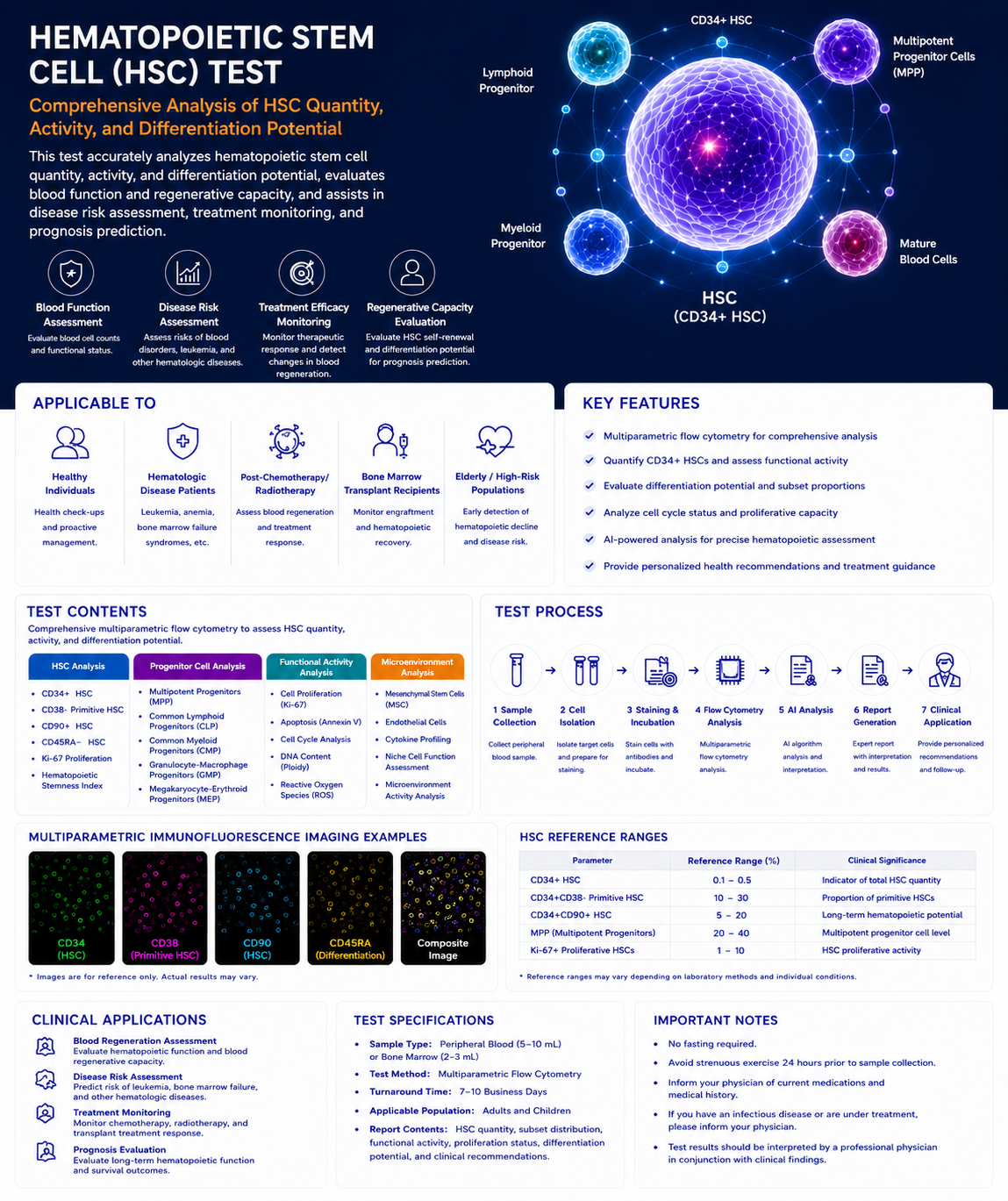
No. Fasting is not required before the test, and you may maintain your normal diet and daily routine.
Q2. Can hematopoietic stem cell levels change over time?
⌄
Yes. The quantity and activity of hematopoietic stem cells can be influenced by age, disease, treatment, lifestyle factors, and overall health conditions.
Q3. What do abnormal test results indicate?
⌄
Abnormal results may indicate impaired hematopoietic function, bone marrow dysfunction, or reduced regenerative capacity, and should be interpreted together with clinical findings.
Q4. Are there any risks associated with the test?
⌄
The test requires only a blood sample or a small bone marrow specimen and is considered a low-risk procedure similar to routine laboratory testing.
Q5. How often should follow-up testing be performed?
⌄
Follow-up testing every 6–12 months is generally recommended. Patients with hematologic diseases or those receiving chemotherapy or stem cell transplantation may require more frequent monitoring.
Q6. Who should consider taking this test?
⌄
This test is recommended for patients with anemia or hematologic disorders, individuals undergoing chemotherapy or radiation therapy, stem cell donors, and those interested in regenerative medicine and preventive health management.