FAQ
Q1. Can the NK Cell Test reflect immune function?
⌄
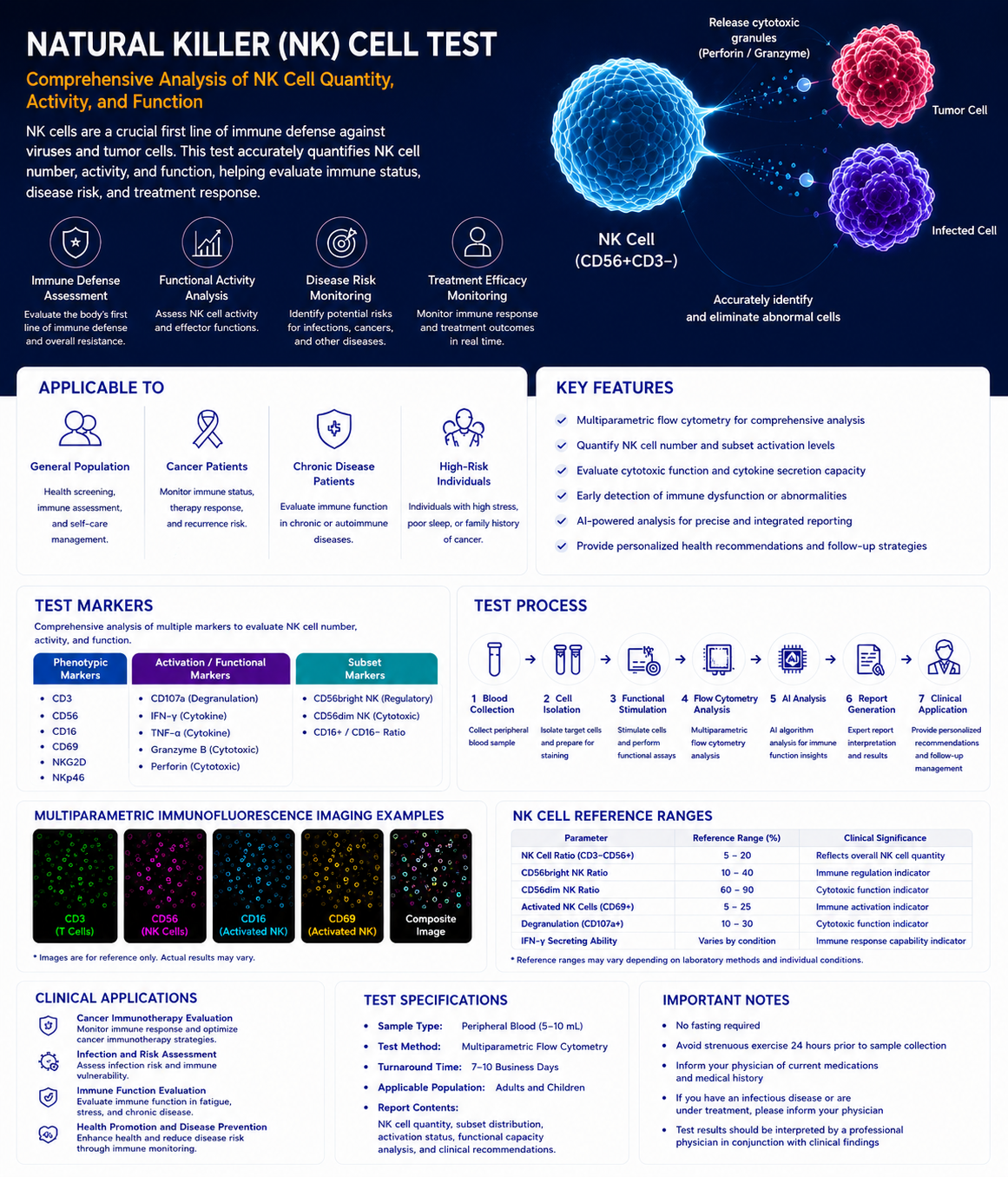
Yes. NK cells are a key component of the innate immune system, and their quantity and activity can reflect the body's ability to defend against viral infections, tumor cells, and abnormal cells.
Q2. What does low NK cell activity indicate?
⌄
Reduced NK cell activity may be associated with weakened immunity, chronic infections, stress, insufficient sleep, aging, or an increased risk of cancer, and should be evaluated further.
Q3. How often should I take the test?
⌄
Testing every 6–12 months is generally recommended. Individuals with cancer, chronic infections, or immune dysfunction may benefit from more frequent monitoring based on physician recommendations.
Q4. Who should consider an NK Cell Test?
⌄
The test is recommended for cancer patients, individuals with chronic infections, those with weakened immune systems, high-stress populations, and anyone interested in preventive health management.
Q5. What should I do if my results are abnormal?
⌄
Abnormal results should be interpreted by a healthcare professional in combination with clinical symptoms, medical history, and other diagnostic findings to guide personalized recommendations.
Q6. Can the NK Cell Test be used to monitor treatment outcomes?
⌄
Yes. Monitoring changes in NK cell levels and activity can help evaluate responses to immunotherapy, cancer treatments, and health management interventions.