
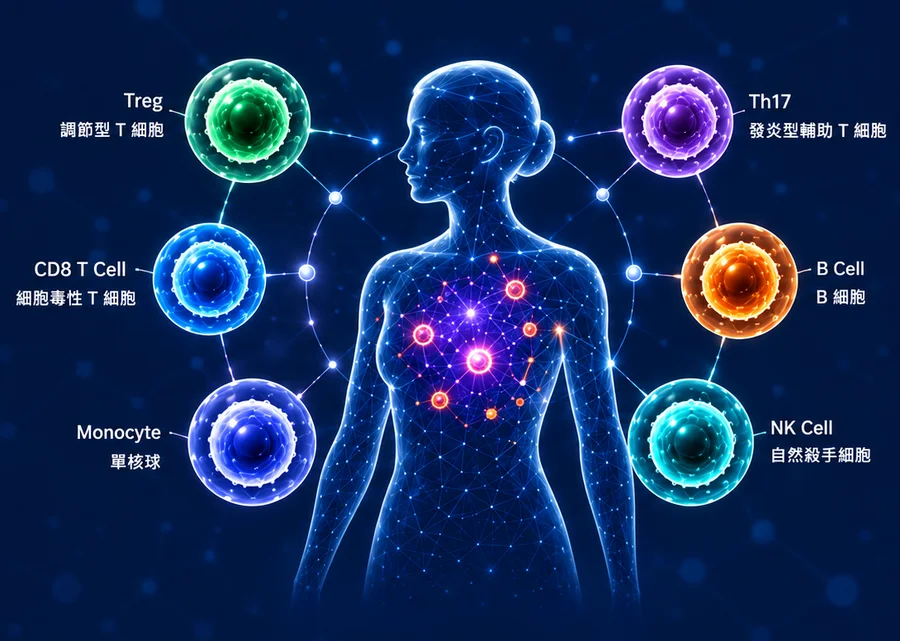
Autoimmune Risk Assessment
Identify immune system dysregulation and early signs of autoimmunity
Precise Data Analysis
Quantify immune cells and their functional activity
Disease Risk Prediction
Predict autoimmune disease risk and inflammation tendency
Personalized Health Management
Support personalized treatment strategies and track immune health status
Who It's For
Patients with Autoimmune Diseases
e.g., rheumatoid arthritis, SLE, psoriasis, multiple sclerosis
Individuals at Risk of Autoimmune Diseases
Family history, positive autoantibodies, high-risk groups
Patients with Chronic Inflammation
e.g., chronic fatigue, IBD, atopic dermatitis, frequent infections
Patients Undergoing Treatment
Monitor treatment effectiveness and immune response
Health Management Seekers
Preventive health assessment and immune optimization
Test Panel
Using multicolor flow cytometry, this test comprehensively evaluates the quantity and function of key immune cell subsets.
T Cell Analysis
- Total T Cells (CD3+)
- Helper T Cells (CD4+)
- Cytotoxic T Cells (CD8+)
- Naive T Cells (CD4+/CD45RA+)
- Memory T Cells
Regulatory & Helper T Cell
- Regulatory T Cells (Treg) (CD4+ / CD25+ / FOXP3+)
- Th17 Cells (CD4+ / IL-17A+)
- Th1 Cells (CD4+ / IFN-γ+)
- Th2 Cells (CD4+ / IL-4+)
- Follicular Helper T Cells (HLA-DR+, CD38+)
B Cell Analysis
- Total B Cells (CD19+)
- Naive B Cells
- Memory B Cells
- Activated B Cells (CD19+ / CD69+)
- Plasma Cells (CD19+ / CD38+)
Innate Immune Cells
- Natural Killer Cells (NK) (CD16+ / CD56+)
- Monocytes (CD14+)
- Dendritic Cells (DC) (CD11c+)
Test Workflow

Sample Collection
Collect peripheral blood sample

Cell Isolation
Isolate peripheral blood mononuclear cells (PBMCs)

Staining
Multicolor antibody staining for specific immune markers

AI Analysis
AI-powered analysis for immune cell profiling

Report Generation
Comprehensive immune profile report

Clinical Application
Support clinical decisions and health management
Multicolor Flow Cytometry Imaging Examples
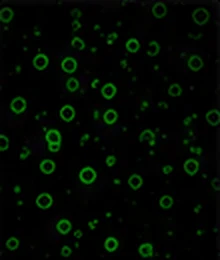
CD3 (T Cell)
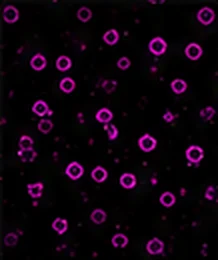
CD19 (B Cell)

CD4 (Helper T Cell)
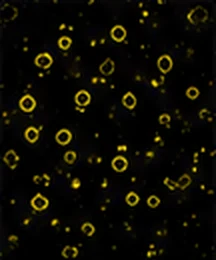
CD56 (NK Cell)
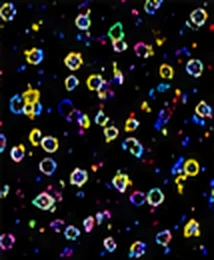
Merged Image
Reference Ranges for Immune Cell Subsets
| Cell Subset | Reference Range (%) | Primary Function |
|---|---|---|
| Treg (CD4+ CD25+ FOXP3+) | 2 – 6 | Maintain immune tolerance and prevent autoimmunity |
| Th17 (CD4+ IL-17A+) | 0.5 – 2.0 | Pro-inflammatory & autoimmunity |
| CD4+ T Cells | 30 – 60 | Immune response & helper function |
| CD8+ T Cells | 15 – 35 | Eliminate infected or abnormal cells |
| B Cells (CD19+) | 5 – 20 | Antibody production & humoral immunity |
| NK Cells (CD16+ / CD56+) | 5 – 20 | Innate immunity & tumor surveillance |
* Reference ranges may vary depending on laboratory methods and population characteristics.
Clinical Applications
Assist in diagnosing autoimmune diseases and immune dysregulation
Evaluate chronic inflammation and immune activation
Monitor treatment efficacy and immune response
Predict disease risk and recurrence
Support personalized treatment and health management
Key Features
- Multi-parameter flow cytometry for immune cell analysis
- Quantitative assessment of immune cell subsets and functional activity
- Evaluate cell activation, inhibition, and inflammatory status
- Comprehensive analysis of multiple immune cell populations
- AI-powered analysis for precise immune profiling
- Support treatment planning and monitoring
- Track immune changes and evaluate treatment outcomes
Test Specifications
- Sample Type: Peripheral blood (5–10 mL)
- Method: Multicolor flow cytometry
- Turnaround Time: 7–10 business days
- Suitable For: Adults and children
- Report Includes: Cell counts, percentages, and functional activity analysis
Important Notes
- No fasting required
- Avoid intense exercise 24 hours before test
- Inform physician of medications or supplements
- Not intended to diagnose acute infections
- Please consult your physician for test interpretation
Test Value
- Comprehensive immune profiling for precision health
- Early detection of immune imbalances
- Personalized treatment optimization
- Monitor treatment response and prevent disease progression
FAQ
Q.What is the Autoimmune Functional Immune Cell Test?
This test analyzes the quantity, proportion, and functional status of immune cells associated with autoimmune diseases to evaluate immune balance and chronic inflammation.
Q.Who should consider taking this test?
The test is recommended for individuals with autoimmune diseases, chronic inflammatory symptoms, immune dysfunction, treatment monitoring needs, or long-term health management goals.
Q.Which immune cells are analyzed in this test?
The panel evaluates key immune cell populations including Treg cells, Th17 cells, CD4+ T cells, CD8+ T cells, B cells, NK cells, monocytes, and other immune-related biomarkers.
Q.Can this test help monitor treatment outcomes?
Yes. The test can track changes in immune cell profiles over time and help evaluate treatment response and disease progression.
Q.How long does it take to receive the results?
Reports are typically available within 7–10 business days, with expedited processing available when necessary.
Q.Is any preparation required before the test?
Fasting is generally not required. However, patients should inform their physician about current medications or immunosuppressive therapies before testing.