
Key Advantages
Comprehensive Assessment
18+ immune cell indicators for a complete understanding of immune status
Precision Analysis
Advanced flow cytometry combined with AI data analysis
Early Warning
Early detection of potential immune imbalances and disease risks
Personalized Strategy
Customized health strategies based on individual immune profile
Scientific Tracking
Regular monitoring of immune changes to track health trends
Holistic Health
Enhance immune function, delay aging, and maintain optimal health
Suitable For
- Individuals seeking to improve immune health
- People under high stress or work pressure
- Individuals experiencing frequent illness or fatigue
- Individuals with a family history of cancer or autoimmune diseases
- Post-surgery, post-treatment, or recovery individuals
- Cancer patients and survivors
- Individuals with chronic conditions
- Athletes and high-performance professionals
Testing Indicators (18+ Items)
- Proportion of Lymphocyte Subsets
- T Cell Function (CD4/CD8 Ratio, etc.)
- B Cell Activation and Memory Status
- NK Cell Activity and Cytotoxicity
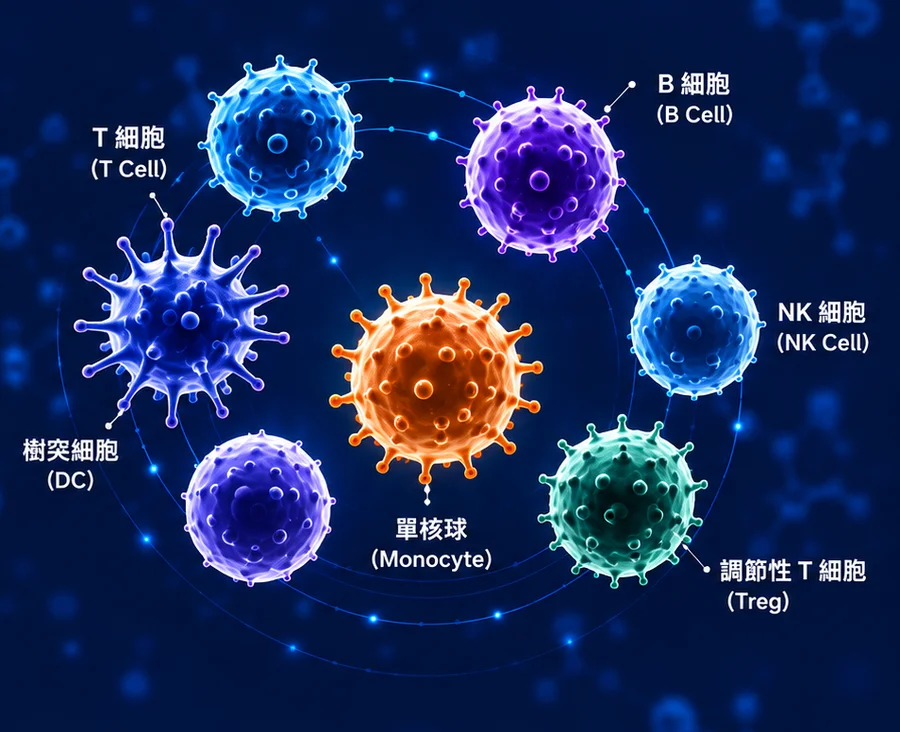
- Regulatory T Cell (Treg) Proportion
- Immune Checkpoints (PD-1, TIM-3, LAG-3)
- Cytokine Profile Analysis
- Monocyte and Dendritic Cell Function
- Neutrophil Functional Analysis
- More immune cell functional indicators…
Testing Process

Blood Collection
Simple blood draw

Flow Cytometry Analysis
High-precision detection

AI Data Analysis
Multi-dimensional analysis

AI Report Interpretation
Professional health insights

Physician Consultation
Personalized health strategies
Test Result Interpretation
Actual results will be evaluated by a professional physician based on your overall health condition.
Low
Immune function is low. Prone to illness, fatigue, and chronic inflammation.
Low-Normal
Immune function is slightly low. Need lifestyle adjustments and nutrient support.
Normal
Immune function is balanced. Maintain healthy lifestyle and good habits.
Good
Immune function is strong. Good defense and self-repair capability.
Excellent
Immune function is optimal. Strong resilience and rapid recovery ability.
Clinical Applications
Immune Function Assessment
Understand your immune status
Autoimmune Disease Risk Assessment
Predict risk of allergies, autoimmune disorders, and inflammation
Cancer Risk Support
Assist in early cancer risk evaluation
Infection & Inflammation Evaluation
Assess infection risk and immune response
Anti-Aging Management
Delay aging and enhance vitality
Precision Health Management
Personalized health strategies and nutritional guidance
FAQ
Q.Is fasting required before the Immune Cell Comprehensive Test?
Yes. Fasting for at least 8 hours before the test is recommended to ensure accurate and consistent results. Please follow your physician's instructions if special circumstances apply.
Q.How long does it take to receive the test results?
Results are typically available within 5–7 business days. A comprehensive AI-powered report with professional interpretation will be provided.
Q.Can medications affect the test results?
Yes. Certain medications, including immunosuppressants, corticosteroids, and immunotherapies, may influence immune cell measurements. Please inform your physician about any medications you are taking before the test.
Q.How often should I repeat the test?
Follow-up testing every 3–6 months is generally recommended to monitor immune function, health trends, and treatment response.
Q.Can immune function be improved?
Yes. A balanced diet, regular exercise, quality sleep, stress management, and appropriate medical care can help improve immune function and overall health.
Q.What should I do if my results are abnormal?
Your results should be reviewed by a healthcare professional, who can provide personalized recommendations and develop an appropriate health management or treatment plan based on your overall condition.