
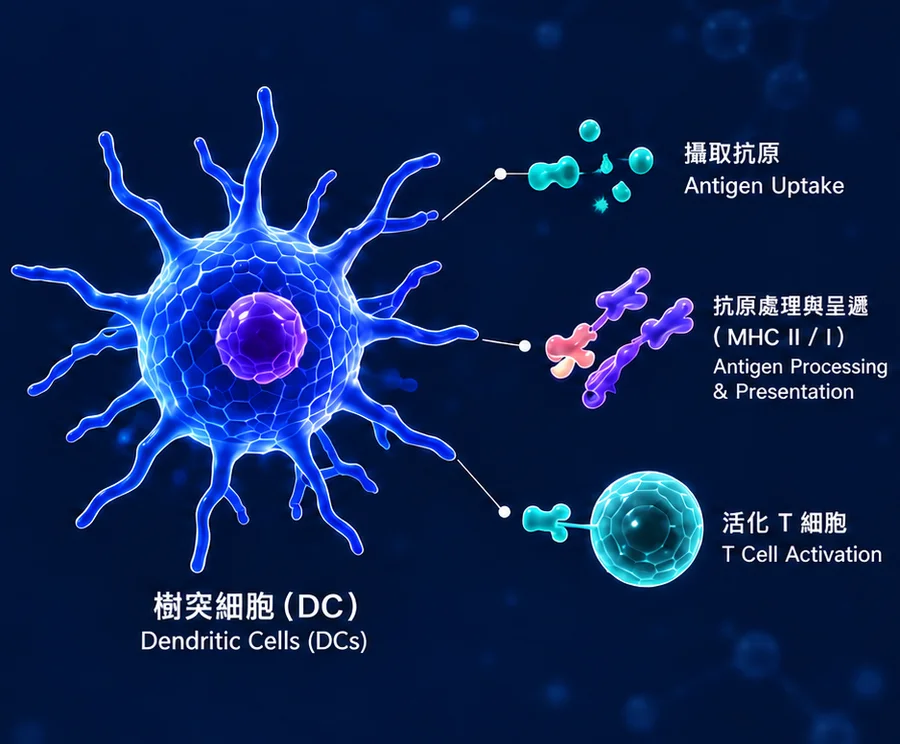
Immune Status Assessment
Evaluate DC quantity and function to understand immune status
Immune Function Analysis
Assess DC activation and antigen presentation capacity
Therapeutic Response Monitoring
Monitor immune response and treatment effectiveness
Personalized Immune Strategies
Provide personalized immune analysis for optimized management
Applicable To
Cancer Patients
Evaluate immune status and risk of tumor progression
Chronic Infection Patients
Monitor DC function in HIV, HBV, HCV, and other infections
Vaccination Recipients
Evaluate vaccine-induced immune response
Autoimmune Patients
Assess immune dysregulation and inflammatory risk
Health Screening Individuals
Understand immune health status and potential risks
Test Contents
Multi-parameter flow cytometry comprehensively analyzes DC quantity, subset distribution, and functional status.
Surface Marker Analysis
- CD45
- HLA-DR
- Lineage (CD3/CD19/CD14/CD16/CD56)
- CD11c
- CD123
DC Subset Analysis
- mDC1 (CD141+)
- mDC2 (CD1c+)
- pDC (CD303+)
- cDC (CD11c+ HLA-DR+)
Activation / Function Analysis
- CD80
- CD86
- CD83
- CCR7
- PD-L1
- IL-12 (Functional Marker)
Test Workflow

Sample Collection
Collect peripheral blood for testing

Cell Separation
Isolate peripheral blood mononuclear cells (PBMCs)

Staining & Flow Cytometry
Multi-color flow cytometry analysis

AI Analysis
AI algorithm analysis and functional scoring

Report Generation
Professional report with interpretation

Clinical Application
Provide personalized immune management and treatment recommendations
Multicolor Flow Cytometry Image Examples
* Images are for reference only. Actual results may vary.
CD11c (Myeloid DCs)

HLA-DR (Maturation)

CD123 (pDCs)
CD141 (mDC1)

CD1c (mDC2)

Merged Image
DC Subset Reference Ranges
| DC Subset | Reference Range (%) | Clinical Significance |
|---|---|---|
| cDC (HLA-DR+ CD11c+) | 0.3 – 1.5 | Evaluate total DC quantity |
| mDC1 (CD141+) | 0.05 – 0.3 | Antigen cross-presentation; anti-tumor immunity |
| mDC2 (CD1c+) | 0.1 – 0.6 | Immune regulation; T cell activation |
| pDC (CD303+ CD123+) | 0.05 – 0.5 | Interferon production; antiviral immunity |
| CD80+ DC | 20 – 60 | Co-stimulatory molecule; immune activation |
| CD83+ DC | 10 – 40 | Maturation indicator |
| CCR7+ DC | 30 – 70 | Migration capability to lymph nodes |
| IL-12+ DC (Functional Marker) | 5 – 25 | Promote Th1 immune response |
* Reference ranges may vary by laboratory and population.
Clinical Application Value
Cancer Immunotherapy Monitoring
Evaluate DC quantity and function to optimize immunotherapy strategies
Vaccine Efficacy Evaluation
Assess immune response and functional activity post-vaccination
Infection Risk Assessment
Evaluate immune defense function and infectious disease risk
Autoimmune Disease Research
Understand immune dysregulation and inflammatory mechanisms
Personalized Health Management
Develop personalized immune management and treatment strategies
Key Features
- Standardized multi-parameter flow cytometry analysis
- Quantify DC subsets and their proportions
- Evaluate maturation status and activation markers
- Assess antigen presentation function (MHC I/II expression)
- Comprehensive functional activity assessment
- AI-driven algorithm for integrated evaluation
- Provide personalized immune management and therapeutic recommendations
Test Specifications
- Sample Type: Peripheral blood 8–10 mL (EDTA tube)
- Testing Method: Multi-color flow cytometry
- Testing Time: 7–10 business days
- Applicable Population: Adults and children
- Report Content: DC quantity, subset proportion, activation status, functional markers, and clinical recommendations
Important Notes
- No fasting required before test
- Avoid intense exercise 24 hours before testing
- Inform physician of current medications
- Pregnancy or acute infection may affect results; consult physician
- Test results should be interpreted by a specialist in conjunction with clinical findings
FAQ
Q.Can the Dendritic Cell Test reflect immune function?
Yes. Dendritic cells serve as a critical bridge between innate and adaptive immunity, and their quantity and function can reflect immune activity and antigen presentation capacity.
Q.Why is it important to analyze mDC1, mDC2, and pDC subsets?
Different dendritic cell subsets perform distinct roles in immune regulation, including antigen recognition, anti-tumor immunity, antiviral responses, and immune modulation.
Q.What do abnormal test results indicate?
Abnormal dendritic cell counts or functions may be associated with infections, chronic inflammation, tumor immune evasion, autoimmune diseases, or immune aging. Clinical evaluation is recommended for interpretation.
Q.Can medications affect the test results?
Yes. Certain medications, including immunosuppressants, corticosteroids, chemotherapy, and immunotherapy treatments, may influence the results. Please inform your physician about any current medications before testing.
Q.Is regular follow-up testing recommended?
Follow-up testing every 3–6 months is recommended to monitor immune status, treatment response, and disease progression.
Q.Who should consider this test?
This test is recommended for cancer patients, individuals with chronic infections, patients receiving vaccines or immunotherapy, and anyone interested in understanding their immune health and disease risk.