

MSC Quantity Assessment
Quantifies MSC proportion and total count.
Functional Assessment
Evaluates cell viability, potency, and functional completeness.
Multi-lineage Differentiation
Assesses adipogenic, osteogenic, and chondrogenic differentiation potential.
Purity & Safety Assessment
Analyzes surface markers and karyotype to ensure safety.
Target Applicable Groups
Patients Seeking Regenerative Therapy
Candidates for MSC-based therapies or autologous cell storage.
Anti-aging & Wellness Individuals
Pursuing cellular rejuvenation and long-term vitality.
Chronic Disease Patients
Individuals with chronic inflammation, autoimmune or degenerative conditions.
Post-Treatment Recovery Group
Individuals requiring tissue repair and functional recovery support.
Testing Contents
Comprehensive flow cytometry analysis to evaluate the quantity, viability, purity, and differentiation potential of MSCs.
Surface Marker Analysis
- CD73+
- CD90+
- CD105+
- CD44+
- CD29+
- HLA-DR– / CD45–
Functional Analysis
- Viability (7-AAD)
- Proliferation (Ki-67)
- Apoptosis (Annexin V)
- Cell Cycle Analysis
Differentiation Potential Analysis
- Adipogenic Differentiation
- Osteogenic Differentiation
- Chondrogenic Differentiation
- Multi-lineage Index
Testing Process

Sample Collection
Collect peripheral blood or adipose tissue.

Cell Isolation
Isolate and culture mesenchymal stem cells.

Flow Cytometry Analysis
Perform multi-parameter flow cytometry analysis.

AI Analysis
AI algorithm analyzes cell count, viability, and functionality.

Report Generation
Generate comprehensive evaluation report with results.

Clinical Application
Provide personalized recommendations and treatment planning.
Multiplex Immunoflorescence Imaging Examples
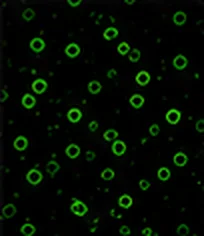
CD73 (Positive)

CD90 (Positive)

CD105 (Positive)

CD45 (Negative)

Merged Image
MSC Reference Ranges
| Marker | Reference Range (%) | Clinical Significance |
|---|---|---|
| CD73+ Cells | ≥ 80 | MSC Major Marker; Higher is Better |
| CD90+ Cells | ≥ 80 | MSC Major Marker; Higher is Better |
| CD105+ Cells | ≥ 70 | MSC Quality Indicator |
| CD45– Cells | ≤ 2 | Lower Hematopoietic Contamination; Better |
| Ki-67+ Proliferating Cells | 5 – 20 | Cell Proliferation Activity Indicator |
| Multi-lineage Index | ≥ 0.6 | Comprehensive Differentiation Potential |
* Reference ranges may vary depending on laboratory methods and sample conditions.
Clinical Application Value
Regenerative Therapy Evaluation
Assess MSC quality and predict therapeutic outcomes.
Anti-aging Assessment
Evaluate cellular vitality to guide anti-aging strategies.
Tissue Repair Evaluation
Assess differentiation potential for tissue repair capability.
Disease Risk Assessment
Evaluate functional decline to predict disease risk.
Treatment Monitoring
Track treatment response and adjust therapeutic strategies.
Key Features
- Multi-parameter flow cytometry for precise MSC analysis
- Quantitative MSC count and viability metrics
- Multi-lineage differentiation potential evaluation
- Surface marker purity and safety assessment
- AI-driven analysis for comprehensive evaluation report
- Integrated quality control with full process traceability
- Provides personalized recommendations for regenerative and health management
Testing Specifications
- Sample Type: Peripheral blood 5–10 mL or adipose tissue 2–3 mL
- Testing Technology: Multi-parameter flow cytometry
- Testing Time: 7–10 business days
- Applicable Age: Adults and children
- Report Content: Cell count, viability, purity, differentiation potential, comprehensive evaluation report
Important Notes
- No fasting required.
- Avoid intense exercise 24 hours before sample collection.
- Inform your physician about current medications.
- Those with acute infections or severe illnesses should postpone testing.
- Test results should be interpreted by professional physicians in combination with clinical findings.
FAQ
Q.Is fasting required before the test?
No. Fasting is not required before the test, and you may maintain your normal diet and daily routine.
Q.How long does it take to receive the test results?
Results are typically available within 7–10 business days, although the turnaround time may vary depending on the specimen type and analysis requirements.
Q.Can the test results influence treatment decisions?
Yes. The results can help evaluate cell quality, viability, and differentiation potential, providing valuable information for regenerative medicine planning and personalized treatment strategies.
Q.What do abnormal test results indicate?
Abnormal findings may indicate reduced cell viability, limited proliferative capacity, or impaired differentiation potential and should be interpreted by a healthcare professional.
Q.How often should follow-up testing be performed?
Follow-up testing every 6–12 months is generally recommended to monitor changes in cellular function and regenerative capacity.
Q.Are there any risks associated with the test?
The test requires only a blood sample or a small tissue specimen and is considered a low-risk procedure similar to routine health examinations.