
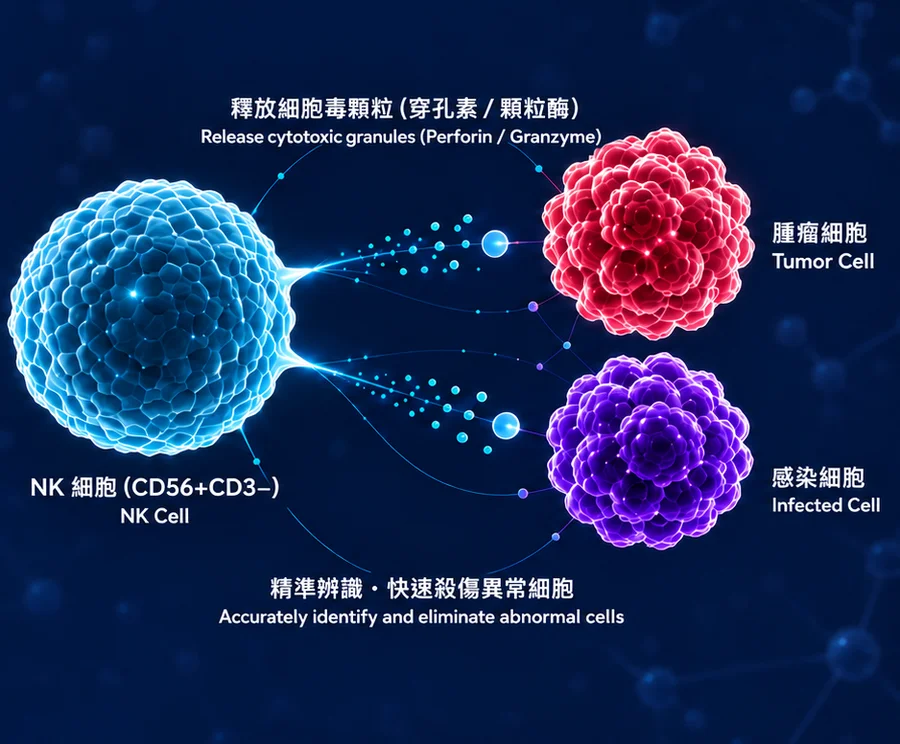
Immune Defense Assessment
Evaluate the body's first line of immune defense and overall resistance.
Functional Activity Analysis
Assess NK cell activity and effector functions.
Disease Risk Monitoring
Identify potential risks for infections, cancers, and other diseases.
Treatment Efficacy Monitoring
Monitor immune response and treatment outcomes in real time.
Applicable To
General Population
Health screening, immune assessment, and self-care management.
Cancer Patients
Monitor immune status, therapy response, and recurrence risk.
Chronic Disease Patients
Evaluate immune function in chronic or autoimmune diseases.
High-Risk Individuals
Individuals with high stress, poor sleep, or family history of cancer.
Test Markers
Comprehensive analysis of multiple markers to evaluate NK cell number, activity, and function.
Phenotypic Markers
- CD3
- CD56
- CD16
- CD69
- NKG2D
- NKp46
Activation / Functional Markers
- CD107a (Degranulation)
- IFN-γ (Cytokine)
- TNF-α (Cytokine)
- Granzyme B (Cytotoxic)
- Perforin (Cytotoxic)
Subset Markers
- CD56bright NK (Regulatory)
- CD56dim NK (Cytotoxic)
- CD16+ / CD16- Ratio
Test Process

Blood Collection
Collect peripheral blood sample

Cell Isolation
Isolate target cells and prepare for staining
Functional Stimulation
Stimulate cells and perform functional assays

Flow Cytometry Analysis
Multiparametric flow cytometry analysis

AI Analysis
AI algorithm analysis for immune function insights

Report Generation
Expert report interpretation and results

Clinical Application
Provide personalized recommendations and follow-up management
Multiparametric Immunofluorescence Imaging Examples
* Images are for reference only. Actual results may vary.
CD3 (T Cells)
CD56 (NK Cells)
CD16 (Activated NK)
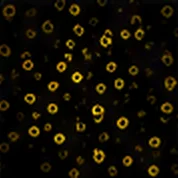
CD69 (Activated NK)

Composite Image
NK Cell Reference Ranges
| Parameter | Reference Range (%) | Clinical Significance |
|---|---|---|
| NK Cell Ratio (CD3-CD56+) | 5 – 20 | Reflects overall NK cell quantity |
| CD56bright NK Ratio | 10 – 40 | Immune regulation indicator |
| CD56dim NK Ratio | 60 – 90 | Cytotoxic function indicator |
| Activated NK Cells (CD69+) | 5 – 25 | Immune activation indicator |
| Degranulation (CD107a+) | 10 – 30 | Cytotoxic function indicator |
| IFN-γ Secreting Ability | Varies by condition | Immune response capability indicator |
* Reference ranges may vary depending on laboratory methods and individual conditions.
Clinical Applications
Cancer Immunotherapy Evaluation
Monitor immune response and optimize cancer immunotherapy strategies.
Infection and Risk Assessment
Assess infection risk and immune vulnerability.
Immune Function Evaluation
Evaluate immune function in fatigue, stress, and chronic disease.
Health Promotion and Disease Prevention
Enhance health and reduce disease risk through immune monitoring.
Key Features
- Multiparametric flow cytometry for comprehensive analysis
- Quantify NK cell number and subset activation levels
- Evaluate cytotoxic function and cytokine secretion capacity
- Early detection of immune dysfunction or abnormalities
- AI-powered analysis for precise and integrated reporting
- Provide personalized health recommendations and follow-up strategies
Test Specifications
- Sample Type: Peripheral Blood (5–10 mL)
- Test Method: Multiparametric Flow Cytometry
- Turnaround Time: 7–10 Business Days
- Applicable Population: Adults and Children
- Report Contents: NK cell quantity, subset distribution, activation status, functional capacity analysis, and clinical recommendations.
Important Notes
- No fasting required
- Avoid strenuous exercise 24 hours prior to sample collection
- Inform your physician of current medications and medical history
- If you have an infectious disease or are under treatment, please inform your physician
- Test results should be interpreted by a professional physician in conjunction with clinical findings
FAQ
Q.Can the NK Cell Test reflect immune function?
Yes. NK cells are a key component of the innate immune system, and their quantity and activity can reflect the body's ability to defend against viral infections, tumor cells, and abnormal cells.
Q.What does low NK cell activity indicate?
Reduced NK cell activity may be associated with weakened immunity, chronic infections, stress, insufficient sleep, aging, or an increased risk of cancer, and should be evaluated further.
Q.How often should I take the test?
Testing every 6–12 months is generally recommended. Individuals with cancer, chronic infections, or immune dysfunction may benefit from more frequent monitoring based on physician recommendations.
Q.Who should consider an NK Cell Test?
The test is recommended for cancer patients, individuals with chronic infections, those with weakened immune systems, high-stress populations, and anyone interested in preventive health management.
Q.What should I do if my results are abnormal?
Abnormal results should be interpreted by a healthcare professional in combination with clinical symptoms, medical history, and other diagnostic findings to guide personalized recommendations.
Q.Can the NK Cell Test be used to monitor treatment outcomes?
Yes. Monitoring changes in NK cell levels and activity can help evaluate responses to immunotherapy, cancer treatments, and health management interventions.