常見問題
Q1. Is fasting required before the Treg Cell Test?
⌄
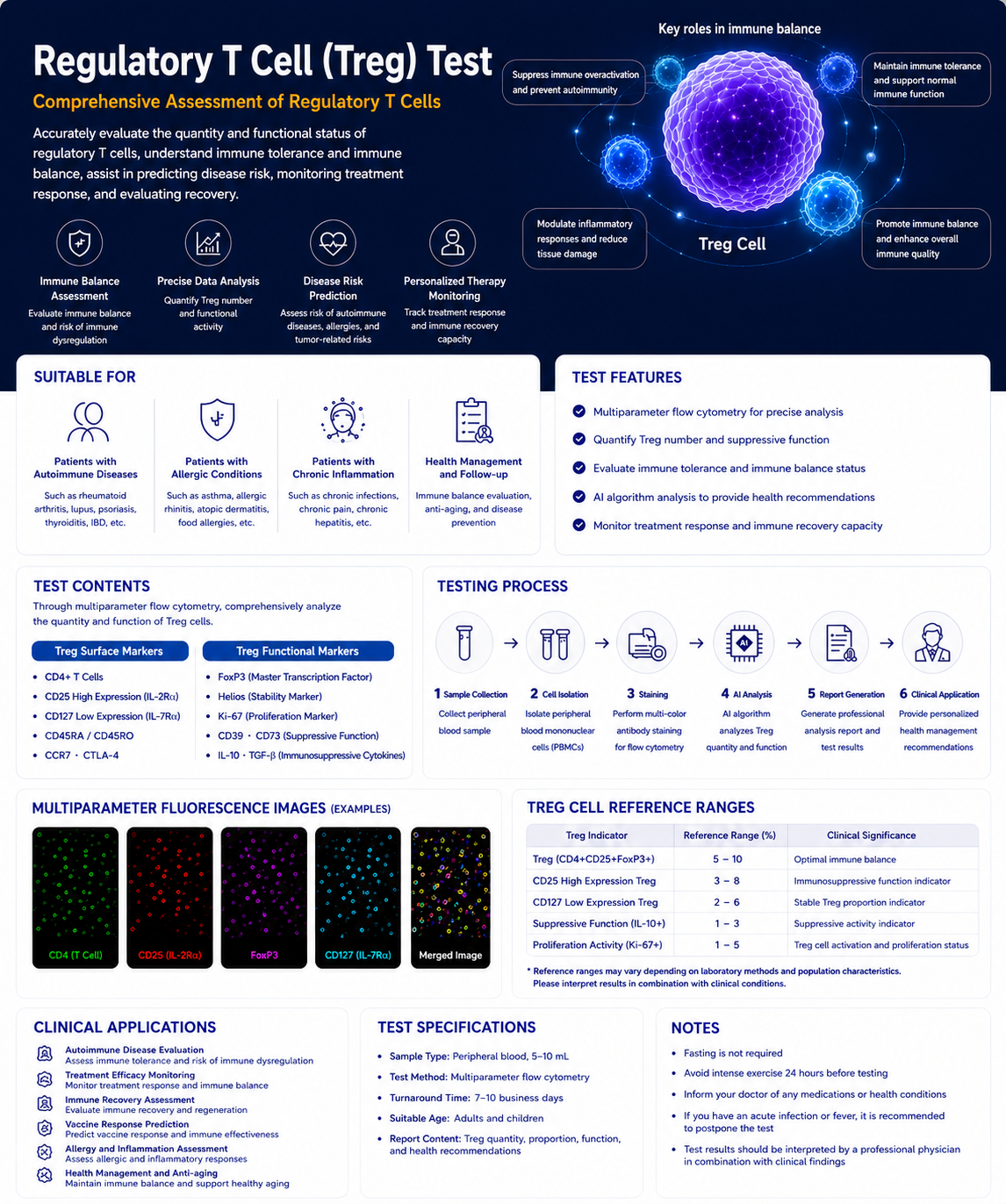
No. Fasting is not required before the test. However, it is recommended to avoid strenuous exercise and inform your physician about any medications you are currently taking.
Q2. What does a low Treg cell count indicate?
⌄
A reduced number or function of Treg cells may indicate immune imbalance and may be associated with autoimmune diseases, chronic inflammation, or an increased risk of allergic disorders.
Q3. What does a high Treg cell count indicate?
⌄
Elevated Treg cell levels may suppress normal immune responses and can be associated with tumor immune evasion, chronic infections, or immunosuppressive conditions. Clinical interpretation is recommended.
Q4. What should I do if my test results are abnormal?
⌄
Your results should be reviewed by a healthcare professional together with your medical history and clinical findings to develop an appropriate health management or treatment plan.
Q5. How often should I repeat the test?
⌄
Follow-up testing every 6–12 months is generally recommended. Patients with autoimmune diseases or those receiving immunotherapy may require more frequent monitoring based on physician recommendations.
Q6. Are there any risks associated with the test?
⌄
The test requires only a small peripheral blood sample and is considered a low-risk procedure similar to a routine blood test.